

Event Styling in Architecturally Strong Venues
Why Restraint Is Strategic, Not Minimal
Restaurants are no longer competing on food alone.
In the mid-range market, technical cooking skill is accessible. Ingredients are global. Recipes are replicable.
What cannot be replicated at home is atmosphere.
Increasingly, venues differentiate through spatial narrative: immersive interiors, controlled palettes, theatrical ceilings, and architectural focal points designed for emotional and photographic impact.
Two recent interiors illustrate this shift.
At Fenix (Manchester), the design leans into Mediterranean tactility — lime-washed textures, olive-toned restraint, and warm stone values. The cohesion is deliberate. The space transports guests from a grey British street into a softened, sun-inflected environment. The atmosphere carries as much memorability as the cuisine.
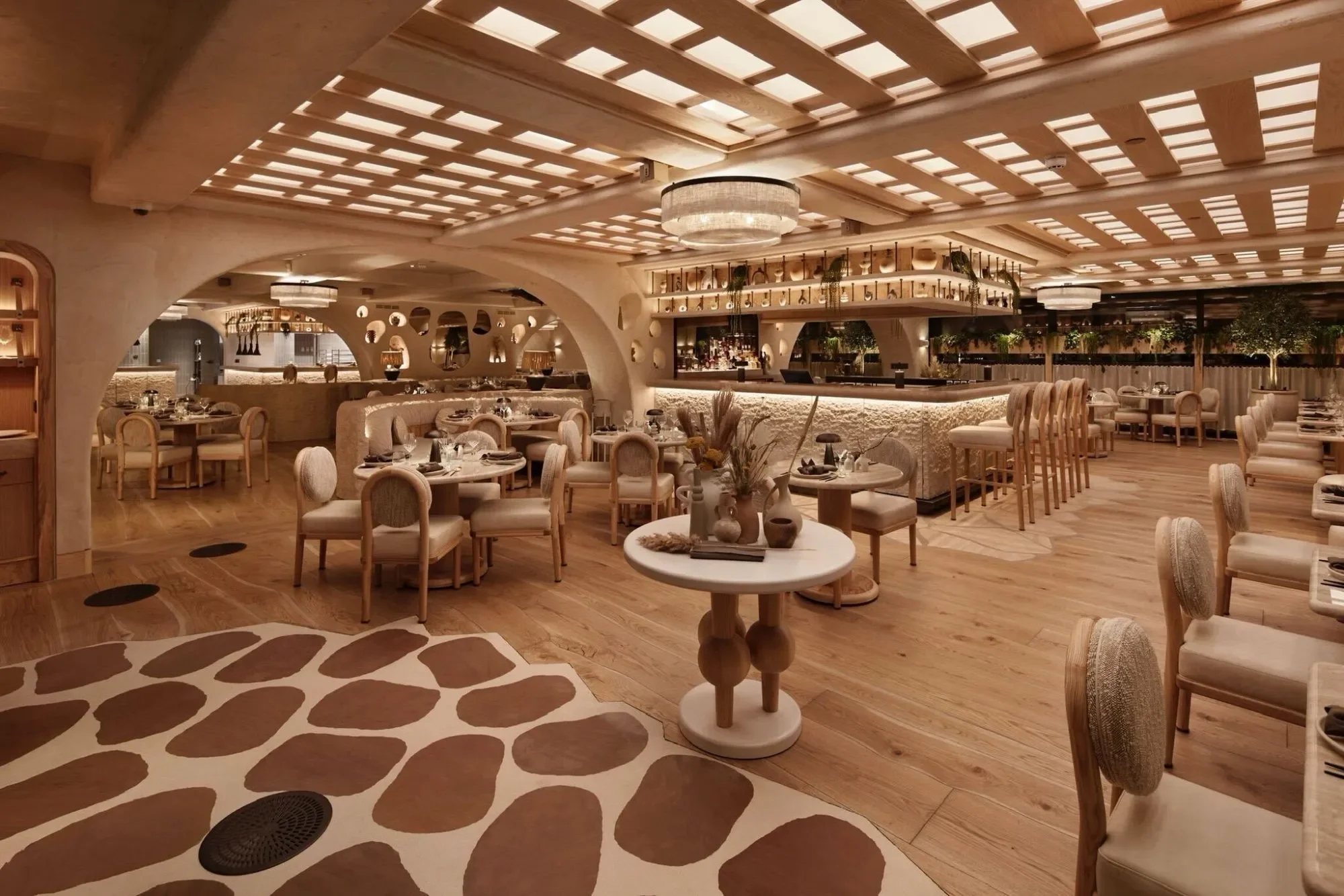
Fenix Manchester Interior
At Baglami (Mumbai), the strategy is more immersive. Under a glass dome, spiralling bands of inscribed fabric form a suspended vortex — part sail, part manuscript, part myth. Lighting is embedded within the folds, creating internal glow rather than external glare. The bar rises to meet the dome’s height, eliminating vertical dead space. Maritime cues, sculptural references, and controlled earth tones construct a coherent narrative of voyage.
In both cases, the food supports the experience.
The architecture anchors it.
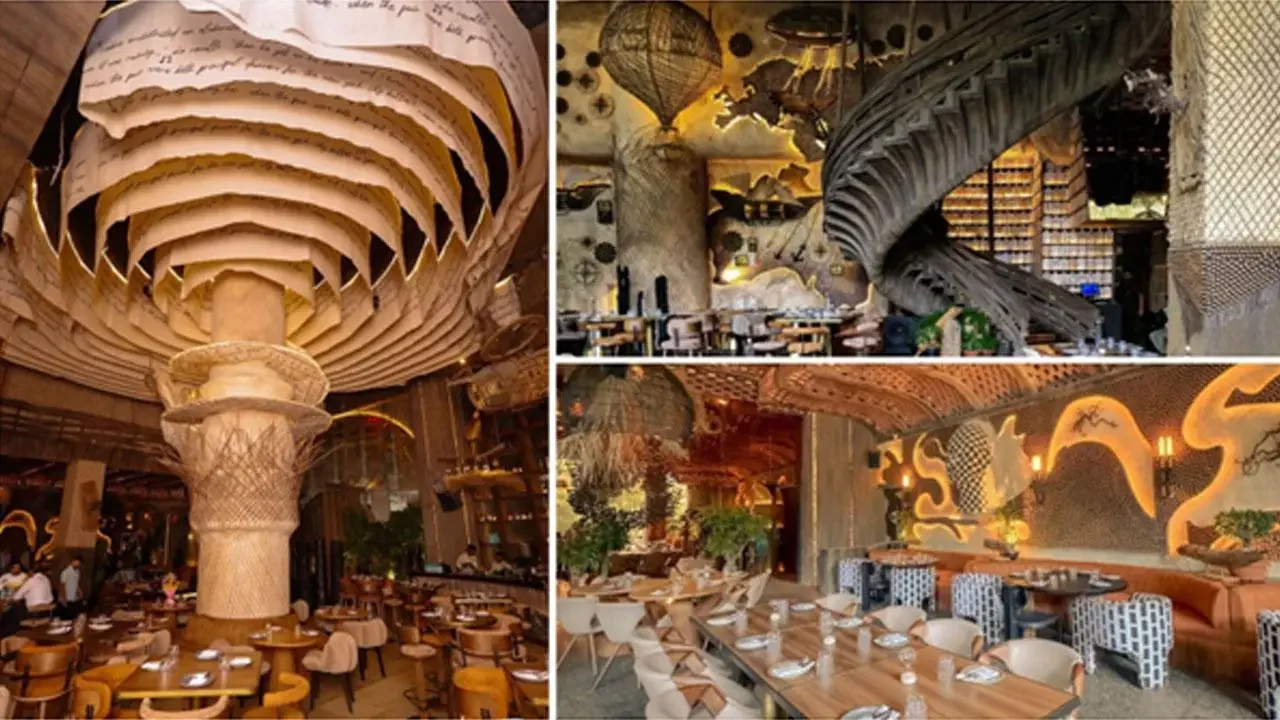
Baglami Mumbai Interior
The Styling Problem
When events are hosted in architecturally expressive venues, a common error appears:
Additional decor competes with the space.
Florals attempt to outshine the ceiling.
Centrepieces introduce new colour systems.
Installations ignore established hierarchy.
The result is visual argument.
Ceiling vs table.
Architecture vs ornament.
Narrative vs narrative.
When everything speaks loudly, nothing reads clearly.
Hierarchy Before Ornament
Architecturally rich venues already contain:
A dominant focal anchor
A controlled value structure
Material rhythm
Narrative cues
Event styling in these environments is not about addition.
It is about calibration.
If the ceiling carries drama, the table should carry restraint.
If the walls hold texture, linens should stabilise rather than compete.
If the palette is earthy and disciplined, introducing high-chroma accents fractures coherence.
In such settings, “less is more” is not aesthetic preference.
It is structural intelligence.
Restraint preserves hierarchy.
And hierarchy preserves atmosphere.
The Strategic Position
Atmosphere is not decoration layered onto a neutral shell.
It is an ecosystem.
In venues where architecture already performs as emotional architecture, the role of styling shifts from creator to collaborator.
The question becomes:
How can styling support what is already working?
Not:
How can styling make this louder?
The strongest events in architecturally expressive spaces understand this principle.
They do not attempt to cover the interior.
They converse with it.
And in that conversation, cohesion is felt rather than announced.
If you enjoyed this read
You might also like “We Picked Our Colour Scheme… Now What?” — a guide on turning pretty colours into a cohesive wedding story.
Warmly,
Nat